Series: The Sequentia Lectures: Unlocking the Math of AI
Part 7: The Frontier – New Paradigms & Unsolved Puzzles
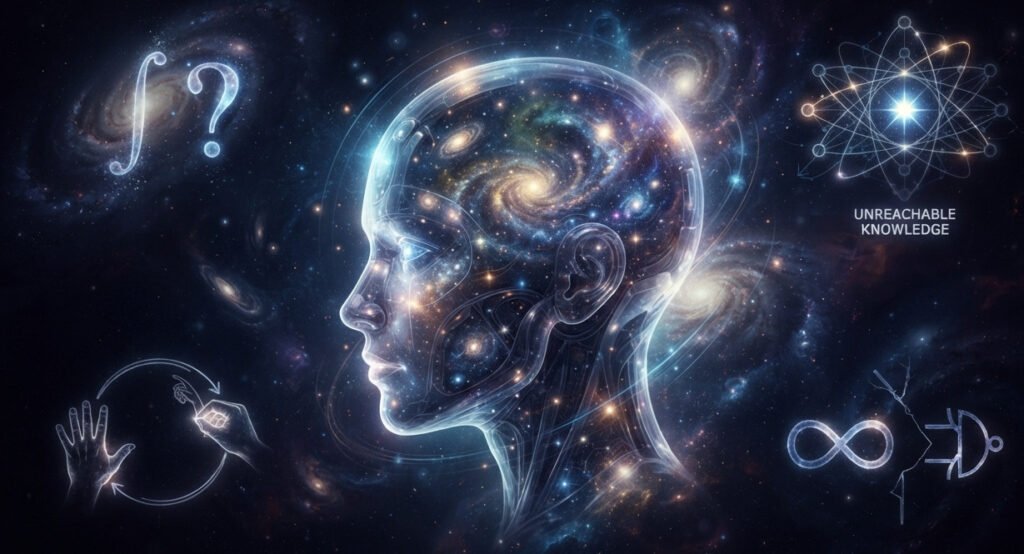
Lecture 70: The Final Frontier: The Unsolved Mathematical Puzzles of General Intelligence
We have reached the end of our grand tour. From the simple elegance of a straight line in linear regression to the dizzying complexity of Transformers and the quantum frontier, we have explored the mathematical machinery that powers modern Artificial Intelligence.
We have built an impressive toolkit, capable of creating systems that can see, write, and generate in ways that often feel intelligent. But are they truly intelligent? What is the mathematical and philosophical chasm that separates the Narrow AI of today—systems designed for specific tasks—from the Artificial General Intelligence (AGI) of our dreams and science fiction?
For our final lecture, let’s look beyond the horizon at the ultimate puzzles that lie at the very edge of science, mathematics, and philosophy.
Beyond Pattern Matching: The Puzzle of “Understanding”
As we discussed in the last lecture, our current models are masters of correlation, not causation. They are brilliant mimics, learning to associate patterns in data with desired outputs. They can write a sonnet in the style of Shakespeare because they have learned the statistical patterns of his language, but they do not understand love, loss, or mortality.
What mathematical framework could ever capture true “understanding” or “common sense”? This is perhaps the biggest unsolved problem. It’s a shift from learning a function (f(x) = y) to building a comprehensive, causal, and dynamic world model inside the machine.
The Mathematics of Consciousness: Can We Measure Awareness?
If true understanding is the goal, what about the most profound aspect of intelligence: consciousness, or subjective experience? Can this ever be a subject for mathematics?
Some researchers believe it can. One of the most fascinating and controversial theories is Integrated Information Theory (IIT), proposed by neuroscientist and psychiatrist Giulio Tononi.
- The Core Idea: IIT proposes that consciousness is a property of a system’s causal structure. A system is conscious to the degree that its current state contains a large amount of “integrated information.” This means the system as a whole is more than the sum of its parts; the information it holds cannot be broken down into independent components.
- The Measure (Phi, Φ): The theory provides a (fiendishly complex) mathematical formula to calculate a number called Phi (Φ). A system with a high Φ, like the human brain, is highly conscious. A system with a Φ of zero, like a simple digital camera, is not.
- The Implication for AI: According to IIT, a standard computer running a “feed-forward” algorithm, no matter how complex, would have a low Φ because its causal structure is simple and not deeply integrated. To build a conscious AI, we might need entirely new, brain-like architectures (like the neuromorphic hardware we discussed) that have a high degree of integrated, recurrent feedback.
IIT is far from proven, but it represents a bold attempt to bring the ultimate mystery of the mind into the realm of formal mathematics.
The Limits of Formal Systems: Gödel’s Ghost in the Machine
Finally, even if we could build a perfectly logical, reasoning AGI, would it be able to understand everything? Would it be able to understand itself? Here, we encounter the profound shadow of one of the greatest mathematical results of all time: Gödel’s Incompleteness Theorems.
In the 1930s, Kurt Gödel proved that in any formal mathematical system that is powerful enough to describe basic arithmetic, there will always be statements that are true but which can never be proven within that system.
- The Implication: This suggests that any sufficiently complex logical system (including, potentially, a future AGI) will have inherent limitations. There will be truths about its own system or the universe that it can “see” but can never formally prove through its own internal logic. It implies that no single formal system, no matter how powerful, can ever capture all of mathematical truth.
- The Philosophical Puzzle: Does this place a fundamental, mathematical limit on what an AGI could ever “know” or “understand”? Does it mean that human intuition, which can often grasp truths that are hard to prove formally, has a quality that can never be fully replicated in a computational system?
These are not questions that have easy answers. They are the deep, foundational puzzles that await us at the final frontier.
The End of the Beginning
Our journey through the mathematics of AI has taken us from simple lines to the limits of computation and consciousness. We’ve seen that AI is not magic; it’s a tapestry woven from the elegant threads of linear algebra, the dynamic engine of calculus, and the nuanced language of probability.
But we’ve also seen that for every problem solved, new and deeper puzzles emerge. The quest for artificial intelligence is far from over. In many ways, it has just begun. It is a grand, ongoing puzzle, and it is the great scientific adventure of our time. Thank you for joining me on this exploration.
