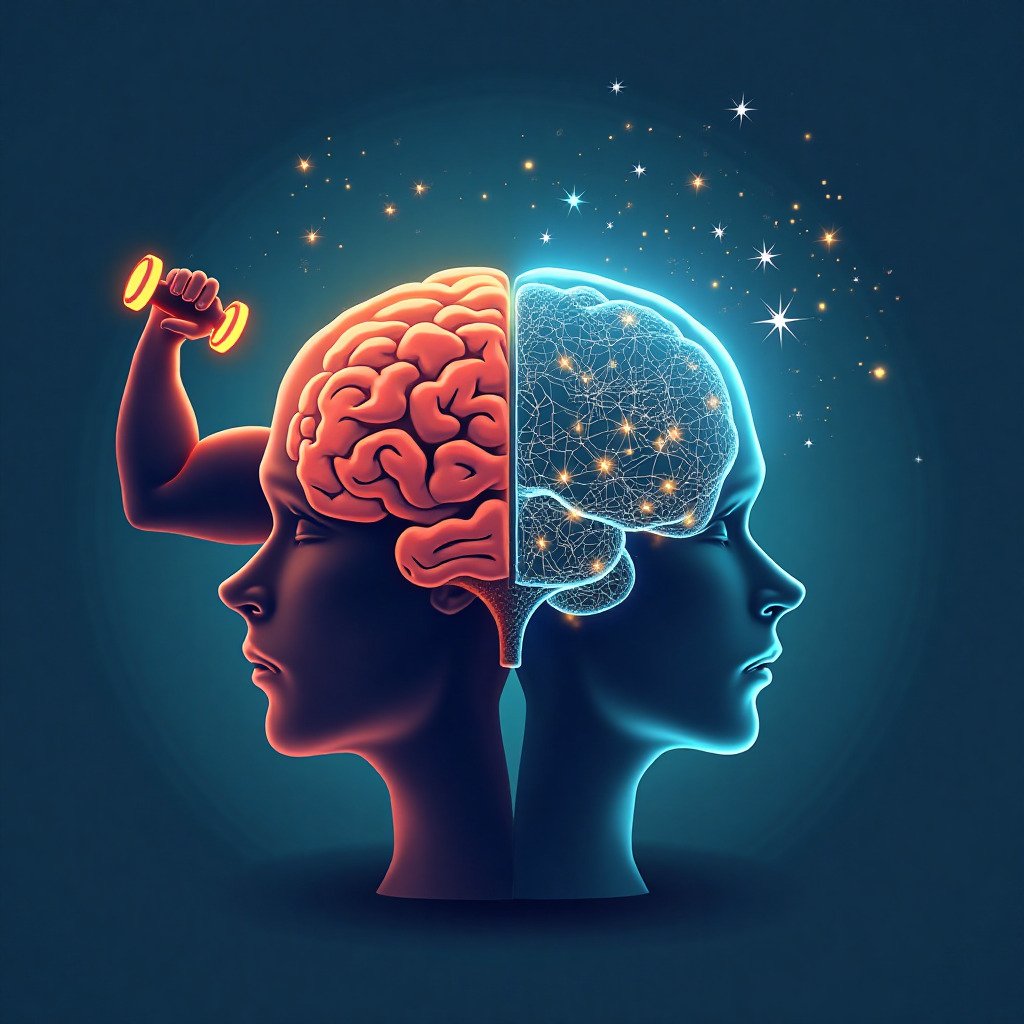
Have you ever watched someone solve a complex logic puzzle or a tricky number sequence with what seems like effortless grace and thought, “Wow, they’re a natural”? It’s a common observation that leads to a fascinating question: are some people simply born with a “puzzle-solving talent,” or is it a skill that can be developed by anyone?
Here at Sequentia, we believe everyone has the potential to sharpen their minds. Today, let’s explore the compelling debate between innate skill and dedicated practice in the world of puzzles.
The Case for “Innate Skill”: The Head Start
It would be naive to suggest that everyone starts from the exact same baseline. Some individuals may indeed have cognitive predispositions that give them a head start. These might include:
- Strong Working Memory: The ability to hold and manipulate multiple pieces of information in your mind simultaneously is a huge advantage in complex puzzles.
- Fluid Intelligence: This refers to the ability to think logically and solve problems in novel situations, independent of acquired knowledge. People with high fluid intelligence can often see abstract relationships and patterns more quickly.
- A Natural Inclination: Some people are simply more drawn to analytical and logical thinking from a young age. This early interest leads to more exposure and “unintentional practice,” which can look like innate talent later on.
So, yes, a “natural talent” might exist in the form of a more efficient starting toolkit. But is the toolkit all that matters?
The Power of Practice: Forging a Sharper Mind
This is where the story gets exciting. Neuroplasticity—the brain’s incredible ability to reorganize itself by forming new neural connections—tells us that our minds are not fixed entities. Every puzzle you solve, every strategy you learn, and every pattern you recognize actively reshapes your brain.
Here’s how practice transforms puzzle-solving ability:
- Pattern Library Expansion: The more puzzles you do, the larger your mental “library” of patterns becomes. When you see a new sequence, your brain doesn’t start from scratch; it rapidly scans its library for similar problems you’ve solved before. What looks like a flash of genius is often rapid-fire pattern recognition built from experience.
- Strategy Development: A novice might tackle a puzzle with brute force. An experienced solver has a toolkit of strategies: “Have I tried working backward?”, “Can I eliminate possibilities?”, “Is this a Fibonacci variation?”. These strategies are learned, honed, and applied through practice.
- Increased Mental Stamina: Just like training a muscle, consistently challenging your brain builds its endurance. You can focus for longer, handle more complex information, and push through initial frustration more effectively.
- Confidence and Mindset: Practice builds confidence. Instead of seeing a hard puzzle and thinking “I can’t,” you start thinking “How can I?”. This growth mindset is arguably the most powerful tool a puzzle solver can possess.
The Verdict: Talent is a Spark, Practice is the Fire
So, is there such a thing as puzzle-solving talent? Perhaps. It might be the initial spark that gets someone interested or allows them to grasp concepts a little faster.
However, practice is the fire that forges true expertise.
An individual with a “natural talent” who never practices will quickly be surpassed by someone with average initial ability who dedicates themselves to learning, practicing, and developing strategies. The most brilliant puzzle solvers are almost always the ones who are most passionate, persistent, and practiced.
The beautiful conclusion is that puzzle-solving is not an exclusive club for the “naturally gifted.” It’s an accessible skill. Every puzzle you attempt, whether you solve it or not, is a valuable rep in your mental gym. The “talent” isn’t in being born with the answers, but in having the curiosity to keep asking the questions.
What do you think? Have you found your skills improving dramatically with practice? Share your journey in the comments!
